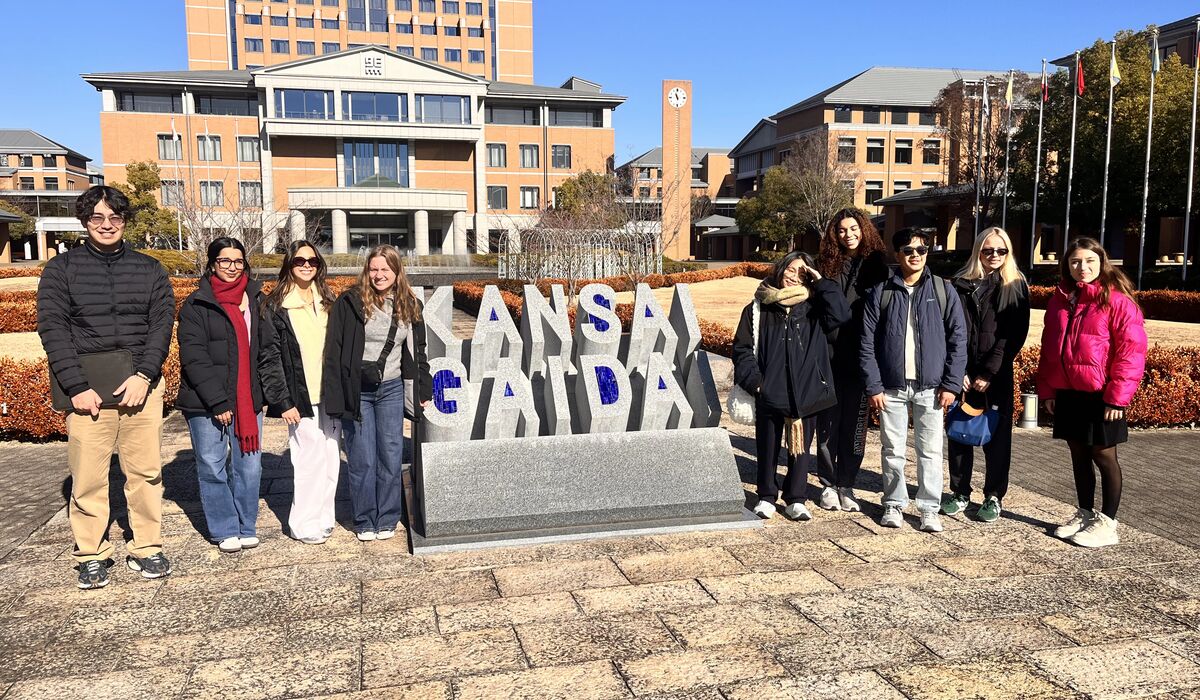
Through expert interviews, student-led learning, and a research-focused trip to Japan, the Eisenhower Institute Undergraduate Fellows connected classroom knowledge with global policy and career readiness.
At a time when science, innovation, federal funding, and global competition are increasingly intertwined, Gettysburg College students in the Eisenhower Institute’s (EI) Undergraduate Fellows program examined a question with implications far beyond any single discipline: How do nations decide what science to fund, what innovation to prioritize, and what responsibilities come with discovery?
Led by Harold G. Evans Professor of Eisenhower Leadership Studies and Biology Prof. Ryan Kerney, the yearlong fellowship, titled “The Policies of Science and Innovation” and supported by Roy ’68, P’02 and Nancy P’02 Fairman, brought together students from STEM, economics, public policy, and related fields to study the policies that shape scientific research and technological progress.
“When I applied for the Evans Professorship, I pitched the idea of doing something along the lines of how science and innovation are supported through policy and the different ways governments can invest in the research and development pipeline,” Kerney said.
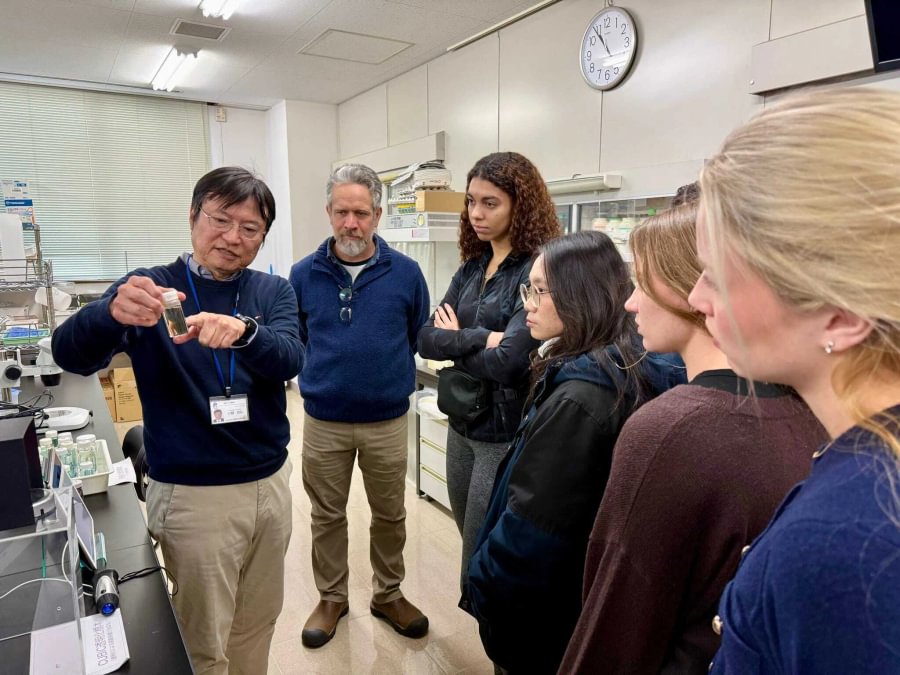
The fellowship combined weekly conversations with faculty and field experts, student-led speaker sessions, writing projects, and a January trip to Japan, where students visited research institutes, scientific funding agencies, and educational institutions. For Tracie Potts, executive director of the Eisenhower Institute, the program also advanced a key institutional goal.
“The thing that excites me so much about this program is we can see movement toward achieving what was one of our strategic goals when I came to EI, which was broadening the academic diversity of our students,” Potts said. “We’re drawing students across academic programs, including computer science, biology, chemistry, mathematical economics, and more.”
Potts noted that the Institute has been intentional about developing programs that remain focused on policy while attracting students beyond traditional policy-centered majors.
“We had a very intentional goal of how we can develop different programming that will still focus on policy, but help students around campus see that they don’t have to just be public policy or political science majors,” she said.
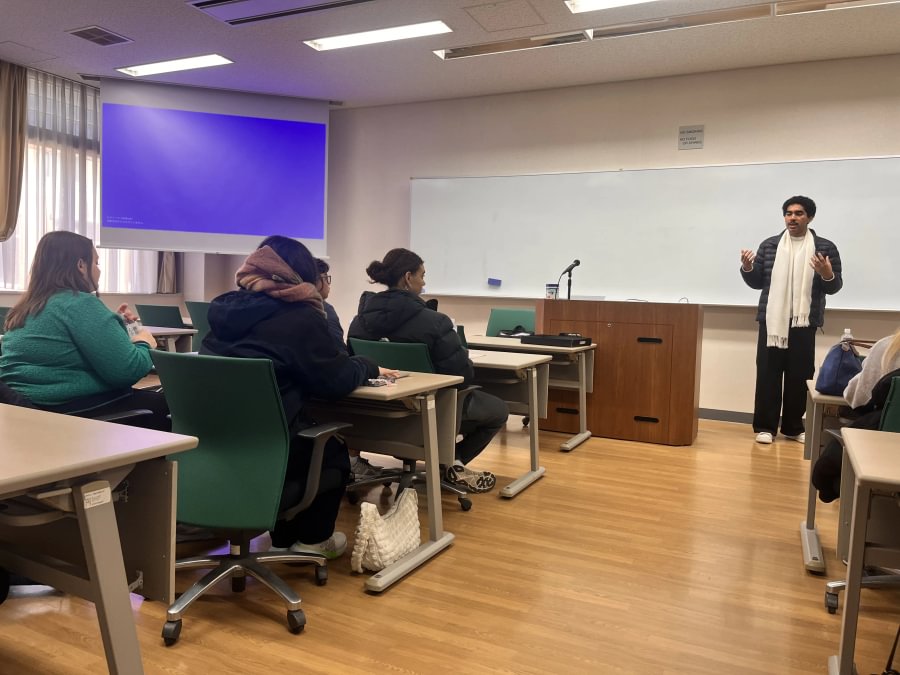
Throughout the year, Fellows explored topics including the research and development pipeline, federal budgets, National Institutes of Health (NIH) and National Science Foundation (NSF) funding, biomedical research policy, science inequalities and trust, the Department of Energy’s Office of Science, AI security, public health policy, technology startups, and science communication.
In the fall, Kerney helped shape the speaker lineup by bringing in faculty colleagues and off-campus experts to talk with the Fellows. In the spring, students identified and invited professionals aligned with their academic and career interests, giving them experience building professional networks.
That practical approach was central to the fellowship. Kerney said students in scientific fields often focus narrowly on experiments or technical problems, but policy awareness gives them a broader understanding of how discovery becomes possible.
“You should put the policy stuff more front and center,” Kerney said, recalling advice he gave one student preparing for industry opportunities. “It shows a bit of breadth and broader thinking about how the overall product gets made from the scientific endeavor.”
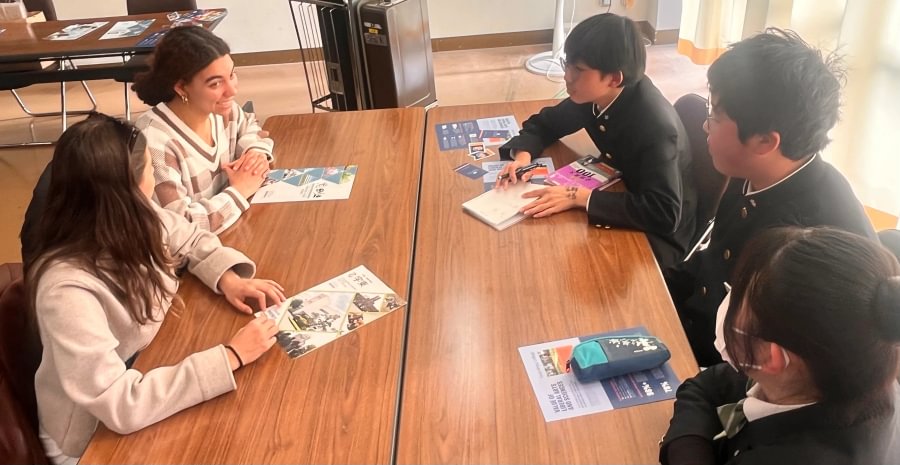
The program’s international component gave Fellows a comparative lens. In January, students traveled to Japan, visiting sites including the RIKEN Center for Biosystems Dynamics Research in Kobe, Kansai Gaidai University, the University of Tokyo, Utsunomiya Higashi Super Science High School, Nikko Academy/Japan Amphibian Laboratory, AMED (the Japan Agency for Medical Research and Development) Tokyo, and the Hiroshima Peace Memorial Museum.
The group’s visit to Hiroshima added a deeper ethical dimension to the study of science policy, allowing students to consider the Manhattan Project, the dawn of the nuclear era, and the human consequences of one of the largest federally supported science projects in history.
Potts said the experience helped students translate academic knowledge into real-world understanding.
“They were able to go to Japan, talk with people who are doing projects that are government funded, visit the labs, and then draw comparisons to how the U.S. approaches policy,” she said.
At the end of the year, Fellows presented their work and reflections on the program, synthesizing what they learned from expert conversations, site visits, research, and comparative study of science policy in the United States and Japan. Students also wrote op-eds intended for publication, giving them experience translating complex policy questions for public audiences and contributing their own voices to broader conversations about science, innovation, and society.
Under Kerney’s guidance, the fellowship program will continue with the theme “Federal Investments in Science” during the 2026-27 academic year. According to the Eisenhower Institute, next year’s Fellows will examine how science advances through government investments in scientific research and training, the long-term impact of those investments on national priorities, and how the U.S. approach compares with other countries.
For Potts, that continuation reflects the value of a program that gives students practical, interdisciplinary experiences they can carry into their careers.
“I think it makes our students much more competitive when they leave here and start looking for jobs,” she said. “It puts them worlds ahead of people who enter the market with a degree, but no applied experience. Our students have both.”
Learn how the Eisenhower Institute empowers students to create change now and in the future.
Related Links:
By Corey Jewart
Photos provided by Prof. Ryan Kerney
Posted: 06/26/26